
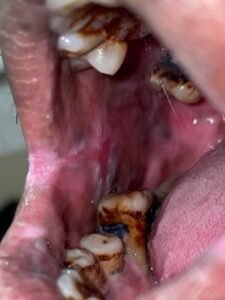
Early Detection is Your Best Defense
Oral cancer is one of the most common cancers in India, largely due to tobacco and betel nut consumption. However, when detected early, it is highly curable. The problem is that many patients ignore the early warning signs, assuming they are just harmless mouth ulcers.
As a leading oral cancer doctor in Kolkata, Dr. Manish Tiwari urges everyone to be vigilant about the following symptoms:
The Warning Signs
- A mouth ulcer that doesn't heal: Any sore in the mouth that lasts for more than 2-3 weeks needs immediate medical evaluation.
- Red or white patches: Unexplained patches (leukoplakia or erythroplakia) on the gums, tongue, or lining of the mouth.
- Unexplained bleeding: Bleeding in the mouth with no apparent cause.
- Difficulty swallowing or chewing: Feeling a persistent lump in your throat or pain when swallowing.
- Neck swelling: A painless lump or mass in the neck is often the first sign that cancer has spread to the lymph nodes.
- Numbness: Loss of sensation in the tongue, lower lip, or chin area.
- Loose teeth: Teeth becoming loose without any dental issues.
When to See a Specialist
If you experience any of these symptoms for more than two weeks, do not wait. Book a screening with a qualified head and neck oncologist immediately. A quick biopsy can confirm the diagnosis, and early-stage treatments are far less invasive.
The Complex Structures of the Head and Neck
To fully appreciate the intricacies of head and neck surgery, one must understand the dense concentration of vital structures in this relatively small anatomical area. The neck houses major blood vessels, including the carotid arteries and jugular veins, which supply and drain the brain. It also contains critical nerves, such as the vagus nerve, the hypoglossal nerve (controlling tongue movement), and the facial nerve. When a tumor develops in the parotid gland, for example, it often wraps around the facial nerve, making its surgical removal an exercise in extreme precision to avoid facial paralysis. Furthermore, the lymphatic system in the neck, consisting of hundreds of lymph nodes divided into different levels, acts as the primary pathway for the metastatic spread of head and neck cancers. A comprehensive surgical plan almost always includes a neck dissection—the systematic removal of these lymph nodes—to stage the disease accurately and prevent regional recurrence.
Surgical Interventions and Treatment Strategies
The cornerstone of curative treatment for early and moderately advanced oral cancers is surgical resection. The primary objective is to achieve 'negative margins'—removing the tumor entirely along with a surrounding cuff of healthy tissue to ensure no microscopic cancer cells are left behind. Depending on the tumor's location, procedures can range from a simple wide local excision of a tongue lesion (partial glossectomy) to a massive composite resection that includes the removal of a portion of the jawbone (mandibulectomy or maxillectomy). Because oral cancers frequently metastasize to the lymph nodes in the neck, a 'neck dissection' is concurrently performed. This meticulous procedure involves carefully stripping the fat and lymph nodes from the vital nerves and blood vessels of the neck. For advanced cases, surgery is often just the first step in a multimodal treatment plan. Based on the final pathology report, the patient may require adjuvant (post-operative) radiation therapy or concurrent chemo-radiation to eradicate any lingering microscopic disease and significantly reduce the risk of recurrence.
The Miracle of Microvascular Reconstruction
Removing a large tumor from the head or neck inevitably creates a significant structural and functional deficit. Decades ago, patients were left with severe disfigurements and lifelong disabilities in eating and speaking. Today, the advent of microvascular free flap reconstructive surgery has revolutionized patient rehabilitation. This highly intricate procedure involves harvesting living tissue—skin, muscle, and bone—from a 'donor site' on the patient's own body, such as the forearm, thigh, or lower leg (fibula). The surgeon transplants this tissue to the head and neck to rebuild the missing structures. Using a high-powered operating microscope and sutures finer than a human hair, the surgeon meticulously connects the tiny arteries and veins of the transplanted tissue to the blood vessels in the neck. This restores blood flow and keeps the reconstructed tissue alive. For example, a fibula free flap can be used to completely rebuild a resected jawbone, allowing for the eventual placement of dental implants and a return to normal chewing function.
Postoperative Care and the Road to Normalcy
Recovery from major head and neck surgery, particularly when combined with microvascular reconstruction, is a gradual process that requires a dedicated, multidisciplinary team approach. Patients typically spend the first few days in the Intensive Care Unit (ICU) for close monitoring of the reconstructed flap and airway management. Nutritional support is paramount; since patients cannot eat by mouth initially, feeding is facilitated through a nasogastric or PEG tube. As healing progresses, intensive speech and swallow therapy commence. The brain and muscles must adapt to the newly reconstructed anatomy. Physical therapy is also crucial for the recovery of the donor site (where the tissue was harvested). Consistent follow-up and adherence to rehabilitation protocols determine the ultimate functional success of the surgery. Dr. Manish S. Tiwari and his dedicated oncology team in Kolkata are committed to providing unparalleled surgical excellence and compassionate postoperative care. By combining aggressive tumor resection with state-of-the-art microvascular reconstruction, they ensure that every patient is given the best possible chance at a cancer-free life with dignity and optimal functional restoration.